Advertisement



Jones (9', 52'), Ritchie (13'), White (26')
Tries
Arundell (20'), Earl (77')
Russell (10', 14', 27', 53')
Conversions
Ford (21', 77')
Russell (3')
Penalties
Ford (25', 44')
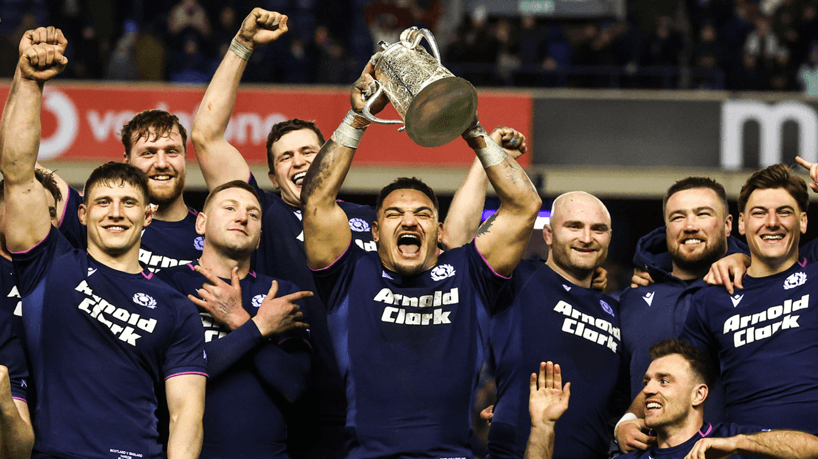
Scotland roared back into life in the Guinness Men’s Six Nations in emphatic fashion by running England ragged to win 31-20 at Murrayfield with a display of focus, precision, and speed, of thought and deed.
A week after their damp squib of a performance against Italy, Gregor Townsend’s side showed how good a side they can be by scoring four tries to claim the winning bonus point, while denying England any spoils at all.
It means Scotland retain the Calcutta Cup, end England’s run of 12 consecutive wins, and claim the Raeburn Shield as lineal world champions.
Here’s how ATR thinks they did so…
Out Of The Blocks
There are fast starts and then there are 17 points before a quarter of the match has passed. When Scotland are in the mood they fizz the ball with pace and accuracy, helped by the first of Henry Arundell’s two visits to the sinbin.
It wasn’t just physical it was cerebral too. Huw Jones’ opener came when Finn Russell’s quick hands left him one-of-one against Maro Itoje, and the outside centre did what he should do against a second row.
Jamie Ritchie’s try came after they had overloaded on the right and then whizzed the ball back to the unprotected left where the recalled flanker had a simple run in.
Such a start filled the team and fans with confidence, damped down any groans about Townsend, and set up an unassailable platform for the rest of the encounter.
Ruling The Skies
Scotland had done their homework on how England like to attack and lay waiting.
First, came the pressure on George Ford so that the time to pick out his winger was greatly reduced, then came the wingers – Kyle Steyn and Jamie Dobie – who were happy to compete, and then there were the support crew who were over much sooner than their English counterparts to sweep up any loose ball or danger, or be on hand to offer support.
They were helped in their job by Arundell’s 30 minutes in the sinbin, but it isn’t their concern if England didn’t change a tactic that wasn’t working.
Down And Dirty
Ritchie was brought into the Scotland side for his work in the tight, and he and fellow flanker Rory Darge had a field day, leading the charge into rucks, and picking out any lone runners.
Darge led tackling with 21 tackles, while second rows Scott Cummings and Gregor Brown made 31 combined. Darge also made three of Scotland’s eight turnovers, one more than the entire England team made.
It meant they had plenty of ball to play with, despite having a scrum and lineout that didn’t function, and were off and running while England’s pack were still in the breakdown.
Key Switches
Scotland’s scrum was probably their weakest facet at Murrayfield. Ellis Genge gave Zander Fagerson plenty of problems, George Turner struggled at times, and Nathan McBeth couldn’t get to grips with Joe Heyes.
Townsend didn’t sit on his hands though and Dave Cherry, Pierre Schoeman and Elliot Millar-Mills came on with 30 minutes to go and stiffened the pack to such and extent that it was the Scottish eight who won a scrum penalty with the clock running down.
Matt Fagerson came on at halftime for Ritchie, and it was his charge down of Ford’s drop goal and quick hands to get the pass to Jones that helped put the result beyond doubt. Even Adam Hastings made it off the bench, coming on for Jamie Dobie with six minutes to go. It says a lot about how dominant Scotland were that the emergency fullback was barely noticed.


