Advertisement

It is hard to decide whether Canada’s win over the USA or Tonga’s over Samoa in the opening round of the PNC 2025 was a bigger upset, but Canada comes to Japan on a high and chasing that elusive Rugby World Cup 2027 qualification after missing out on the last edition of the tournament in France.



It is hard to decide whether Canada’s win over the USA or Tonga’s over Samoa in the opening round of the PNC 2025 was a bigger upset, but Canada comes to Japan on a high and chasing that elusive Rugby World Cup 2027 qualification after missing out on the last edition of the tournament in France.
Canada will face Japan on August 30th in Pool B of the Asahi Super Dry Pacific Nations Cup (PNC) 2025 at the Yurtec Stadium in Sendai.
In last year's PNC matchup between the two, Japan beat Canada in Vancouver 55-28 but these sides are very different. The Canadians are currently ranked 24th and Japan are ranked 13th. That win last year was the first in the second era of Jones as head coach of the Brave Blossoms.
French Top 14, URC and Prem clubs pre-season training means most of the Pacific Nations Cup teams are without some regular first choice players.
Star of the show in the 34-20 win over the USA in Vancouver was No. 8 Tyler Ardron, but he has been recalled to his Top 14 club side Castres and won't feature in the match against Japan, or arguably the rest of the vital campaign. The 34-year old has already said 2025 will be his final season in international rugby and he entered the record books when he became the first Canadian international since 2000 to score four tries in a Test match in the win over rivals the USA.
Prior to the win, the Maple Leafs had lost 14 of their last 15 Tests against the United States.
Canada Head Coach Stephen Meehan said last week of the win. “I thought the players delivered everything we asked of them. Collectively, we’re really happy with what we’ve achieved.” He will need that team effort again to beat Japan away from home but it's not an impossible task.
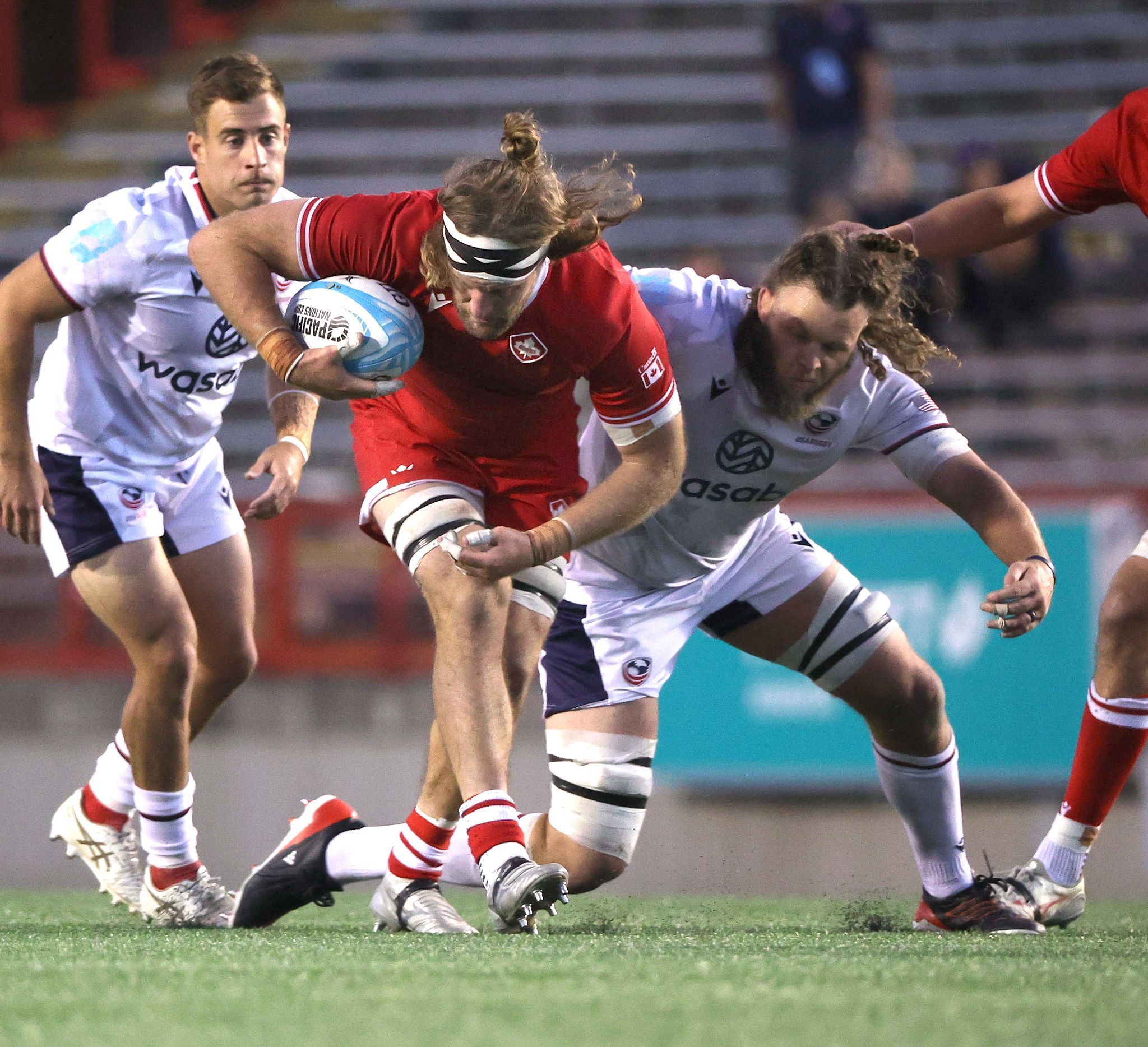
He added of his team, “The players delivered just about everything we asked of them against the United States, and we were proud to secure a significant win on home soil. Japan is a quality side, and we look forward to that challenge. The team has shown real effort and commitment in training in a competitive environment - a clear sign of the depth we're building. Now it's about execution against another higher-ranked opponent.”
The 28-man touring squad the Canadians took to Japan have been acclimatising to the hot and humid conditions and captain and flanker Lucas Ramboll said "It's just as humid here in Toronto, so it's not too hard on me, but it might be tough for the other players. However, I think we'll be able to adjust.” 17 of the 28 in the squad have fewer than ten caps.
One of the Canadian players for Japan to keep an eye on is second row Piers Von Dadelszen, who was a key cog in their lineout success rate, and he also put in a shift with 16 tackles against the USA.
Shane O’Leary starts at fullback to make his first appearance since the 2019 Rugby World Cup.
For Japan, they are without Toulouse-based Naoto Saito, who was with the Brave Blossoms until mid-July. The omission of Captain Michael Leitch was the biggest surprise, and his non-selection was put down to ‘personal reasons’. For a man who adds so much to the team and was earmarked as vital by Jones, as Leitch captained the side to the 1-1 series draw with Wales, it's a huge loss.
It's more Eddie Jones selections again, which raises concerns and doubts. He has blooded so many players in his tenure, no one seems any closer to knowing what a first-choice 23 would look like. Some of those absentees are enforced through injuries, and they are without as many as 11 possible first-choice players. In total, there are as many as ten changes to this weekend’s side that last played and lost to Wales 22-31 on July 12th.
The Japanese training squad initially included 9 uncapped players, which rose to 13, and more than a dozen players have no more than 10 caps.
Eddie Jones said, “It’s an important game, the first in a competition that we’re aiming to win. Canada’s number 10, Nelson has got a very educated left boot so they will be looking to kick a fair bit. We will have to deal with their high balls and then use that as an opportunity to attack.
It will be a great occasion for Warner as Captain. What he’s done over the last week and a half has been very good. Our Co-Captain Harada is unfortunately not fit to play, but he’s been really influential off the field. It’s been a good start for the two of them for what is an enormous honour to captain Japan.
“We’ve got the youngest ever Captain for Japan and eight players with one cap or less in the team, so it’s a really young group. That’s exciting because when you’ve got a group of young players together, they can grow up and experience tough times and then really learn how to enjoy the victories when they come.”
This might well be a tight game where experience counts, and the visitors might not necessarily be stronger in that department; they may have more cohesion and have no new debut players. Whereas there were already several changes to the Brave Blossoms players' training in camp over recent weeks from the initially announced training squad.
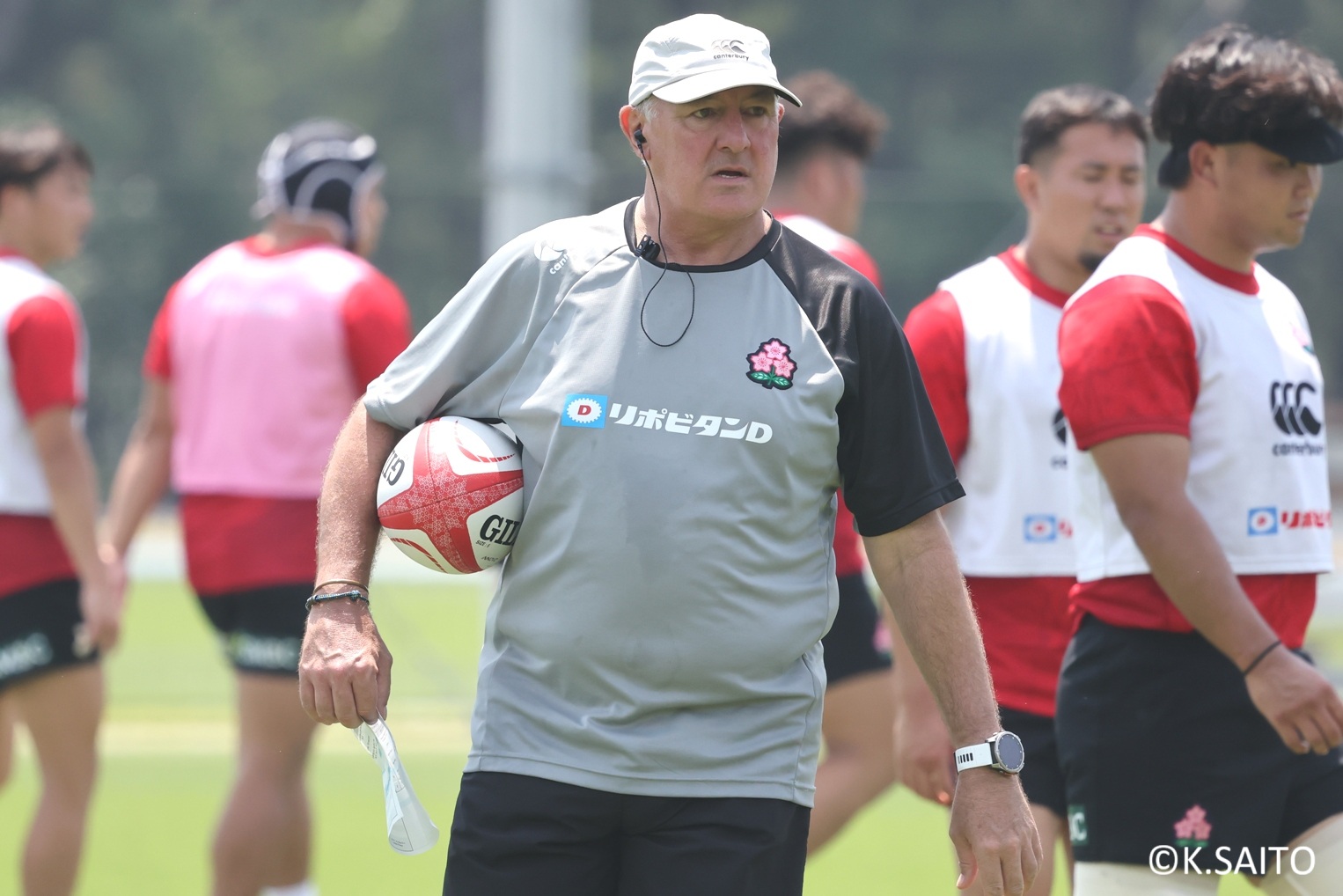
Japan do have South African, and former USA Men’s Head Coach, Gary Gold, in the mix as a new asset in the Japanese setup.
Jones said, “We need to think of how we can introduce the next generation of leaders, and particularly the next generation of Japanese rugby captains … We will make sure those players are as well prepared as possible, but they have huge shoes to fill.
Before the match squad was announced, it was likely the captain would be hooker Mamoru Harada, who was vice-captain, but there were a few contenders for the role. The JRFU confirmed that Mamoru Harada and Warner Deans will be co-captains during the PNC tournament, but Harada was deemed not fit to play this weekend, so Dearns will lead the team against Canada.
The selected starting front row has a combined 17 Test caps, and 15 of those belong to Shuhei Takeuchi. There are four Test debutants in the squad, and in the starting XV, Charlie Lawrence will earn his first cap at inside centre. The former NZ Hamilton Boys' High player is currently at the Mitsubishi Heavy Industries Sagamihara Dynaboars.
Some of the more experienced players in the side who will need to shine in the starting lineup are 30-cap centre Dylan Riley, 23-cap lock and co-captain Warner Dearns (who is destined for Super Rugby next season), and back-rower Ben Gunter. Seungsin Lee should add stability from fly-half, and he already has 20 caps to his name, with newly-capped Sam Greene earning his second cap from fullback.
New caps on the bench are Kenji Sato & Kenta Kobayashi (both front rowers, so the team is light in experience up front), as well as Yuya Hirose. A total of 8 selected players have fewer than 10 caps.
For all the talk of a super-fast brand of Chosoku rugby from Eddie Jones, they have been hot and cold under his tenure and their identity, much like the team selections, is unclear. Should they be beating Canada at home, yes. Is it a done deal - no.
The Japanese players need cohesion and a collected effort, but they have already qualified for the RWC in Australia, and that carrot for the visitors may make them hungrier for the win. A single bonus point will be enough for Canada to book their spot at Australia 2027.
If Canada fails to do so, the USA would need a four-try bonus point victory over Japan and a superior points differential to take Canada’s place in the PNC Semi Final.


