Advertisement

The final scoreboard for the Wallabies game against Ireland shows a 46-19 final result, the Irish team’s biggest win over Australia. It shows that Ireland were always in control of that game. Perhaps what it doesn’t reflect is the fight shown by Australia to keep it close with 20 minutes to go. Despite being outkicked, out-jumped and outscrummed, Australia refused to go quietly.
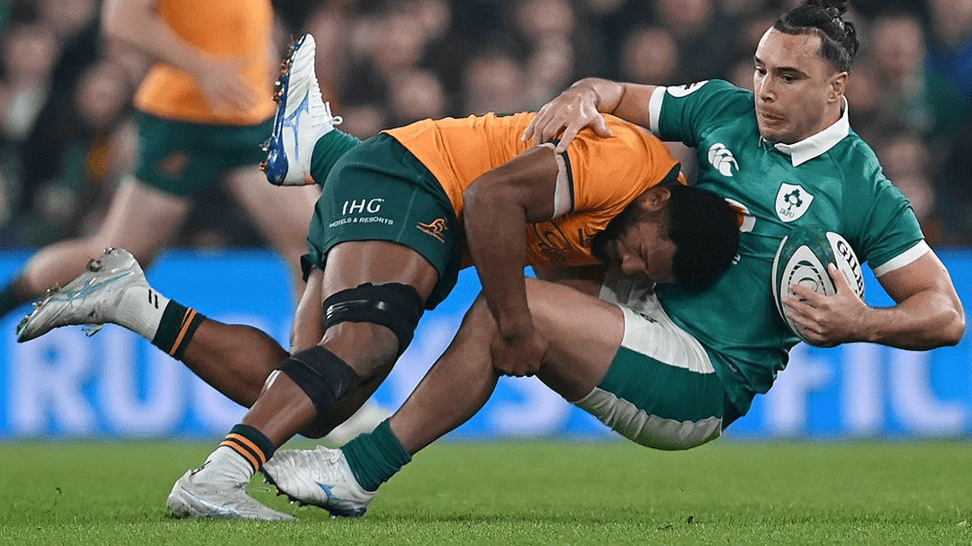
The final scoreboard for the Wallabies game against Ireland shows a 46-19 final result, the Irish team’s biggest win over Australia. It shows that Ireland were always in control of that game. Perhaps what it doesn’t reflect is the fight shown by Australia to keep it close with 20 minutes to go. Despite being outkicked, out-jumped and outscrummed, Australia refused to go quietly.
But you don’t win Test matches when you lose the contestable kicking battle, your set piece falls apart and your backline is smothered of creativity. Especially not in the Northern Hemisphere when it’s bucketing down. The Wallabies are now sliding fast, and they need a win next week or they risk finishing a northern tour winless for the first time in over 60 years. So what can they take from their Dublin bruising as they head to the Stade de France?
It’s a trend that hasn’t been given enough oxygen. The Wallabies biggest Achilles heel this season has been gifting the opposition early points. In seven Tests this year, the opposition scored first. In seven Tests, the opposition scored inside the opening ten minutes.
Dublin followed the script. Ireland grabbed their first points inside five minutes, then built a commanding lead before Australia had even warmed up. Credit to Schmidt’s side, they always scrap their way back. Grit and determination are trademarks of this group, but they’ve come about through necessity. Too often the Wallabies are chasing the game, and it’s a huge reason why their play has felt frantic, impatient and at times completely chaotic.
Equally worrying is the pattern of switching off straight after scoring. In four separate Tests, the opposition struck back with a try within ten minutes of Australia crossing. Against France, they simply cannot afford to hand out soft starters or trade blow-for-blow with a backline as electric as the French.
Each week it seems to be something new. Scrum pressure. Lineout misfires. Breakdown turnovers. Contestable kicks lost. It all comes back to one simple issue: the Wallabies are not consistently nailing their core roles.
Basic catch-and-pass errors, spilling high balls, throwing crooked at lineout time. These are controllable moments, and they were what frustrated Australian fans most after the Ireland game.
The positive is that core skills can be fixed quickly. Rugby is a simple game when you strip it back. Execute your skills under pressure and everything else follows. Schmidt’s system is not complex, but it only functions if the players win their individual battles.
Some will call for mass changes, but the truth is Australia do not have the depth to make sweeping selection statements. Schmidt is picking the best 23 he can with the cattle available. Yes, the European-based call-ups fill some handy gaps, but they are not miles ahead of the incumbents.
With one game left, Schmidt has to roll out his strongest possible line-up and salvage something from this tour. More importantly, he needs to lock in combinations ahead of a home World Cup in 2027. That stability will give incoming coach Les Kiss a far better foundation, with the spine of the matchday 23 already established.